

By BaniByte News Desk
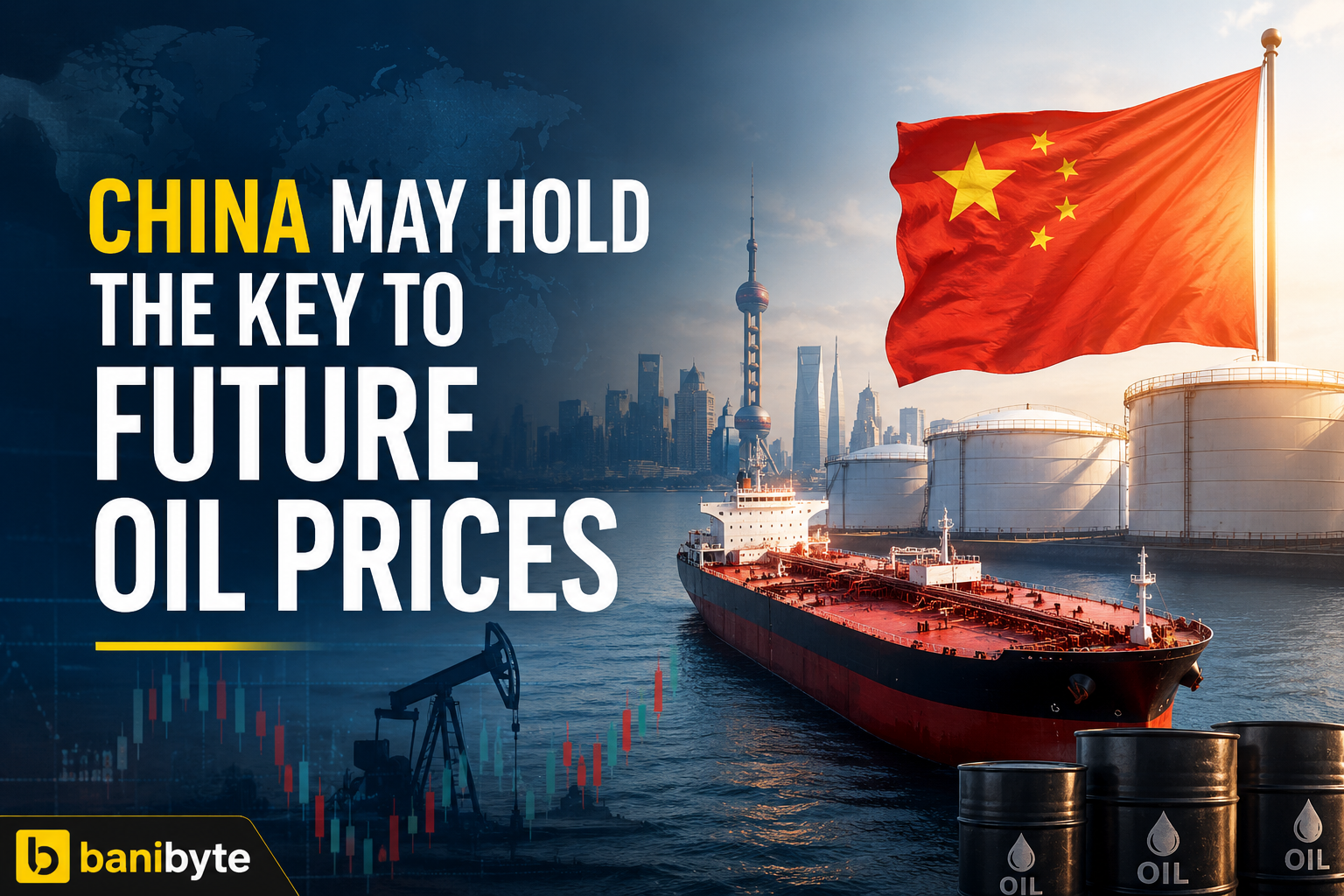
The global oil market is entering a new phase, and surprisingly, the future of oil prices may depend less on the Middle East and more on China.
For months, concerns over disruptions in the Strait of Hormuz and the ongoing Iran conflict raised fears of a major energy crisis. Analysts predicted that oil prices could soar to unprecedented levels. However, despite significant supply disruptions, global crude prices have remained relatively stable.
One of the biggest reasons behind this resilience is China.
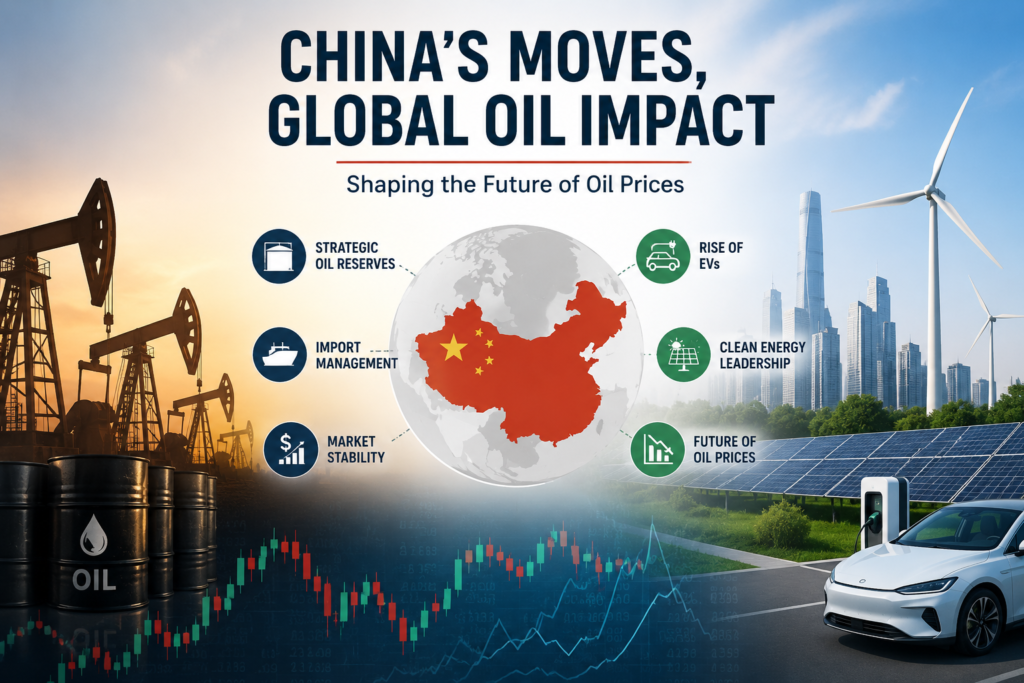
As the world’s second-largest oil consumer, China has successfully reduced its dependence on imported crude by relying on massive strategic reserves, restricting fuel exports, and accelerating the adoption of electric vehicles and renewable energy technologies.
According to energy analysts, China currently holds more than one billion barrels of oil in commercial and strategic storage facilities. These reserves have allowed the country to absorb supply shocks while reducing pressure on global markets.
China’s rapid transition toward clean energy has also played a significant role. With electric vehicles now accounting for nearly half of new passenger car sales in the country, oil demand growth has slowed considerably. This shift has helped offset some of the supply shortages caused by geopolitical tensions.
Could an Oil Oversupply Be Next?
While the world was preparing for a severe oil shortage, experts are now discussing a completely different scenario: oversupply.
The International Energy Agency (IEA) recently warned that if the Strait of Hormuz fully reopens and Middle Eastern production returns to normal, global oil supply could exceed demand in the coming year. Such a development may place downward pressure on prices and create opportunities for countries to rebuild depleted reserves.
However, one major question remains:
Will China continue buying large amounts of oil?
Market analysts believe China’s purchasing decisions could determine whether the global market remains balanced or slips into a supply glut. If Beijing increases imports and rebuilds stockpiles, excess supply could be absorbed quickly. If not, oil prices may face significant downward pressure.
The Bigger Picture
The ongoing energy crisis is also accelerating the global transition toward cleaner energy sources. China’s leadership in electric vehicles, batteries, and solar technology is reshaping global energy demand patterns and reducing long-term reliance on fossil fuels.
As governments and businesses adapt to a changing energy landscape, China’s economic and energy policies are becoming increasingly influential in determining the direction of global oil markets.
BaniByte Insight
The future of oil prices is no longer driven solely by production cuts or geopolitical conflicts. China’s energy strategy, stockpile management, and clean-energy expansion are emerging as some of the most important factors shaping the global market.
Whether the next chapter brings higher prices, market stability, or an oversupply of crude, one thing is clear: the world’s energy future is becoming increasingly connected to China’s decisions.
Stay connected with BaniByte.com for the latest insights on technology, business, energy, and global markets.
The Impact on Emerging Economies
Developing nations are among the most vulnerable to oil price fluctuations. Countries that rely heavily on imported energy often face rising inflation, increased transportation costs, and pressure on foreign exchange reserves when oil prices surge. If global oil markets stabilize due to China’s actions, many emerging economies could benefit from reduced energy costs and improved economic stability.
What Investors Should Watch Next
Investors should closely monitor China’s oil import data, strategic reserve policies, electric vehicle adoption rates, and developments in US-Iran negotiations. These factors could significantly influence global energy markets in the coming months. Any major shift in China’s energy strategy may trigger notable changes in oil prices and investor sentiment worldwide.