

Education is changing rapidly, and Artificial Intelligence (AI) is becoming one of the most powerful tools in modern learning. Traditional classrooms are evolving into smart digital learning environments where students can study more efficiently with personalized support.
AI-powered education platforms are helping students improve their learning experience through intelligent recommendations, instant feedback, and customized study plans.
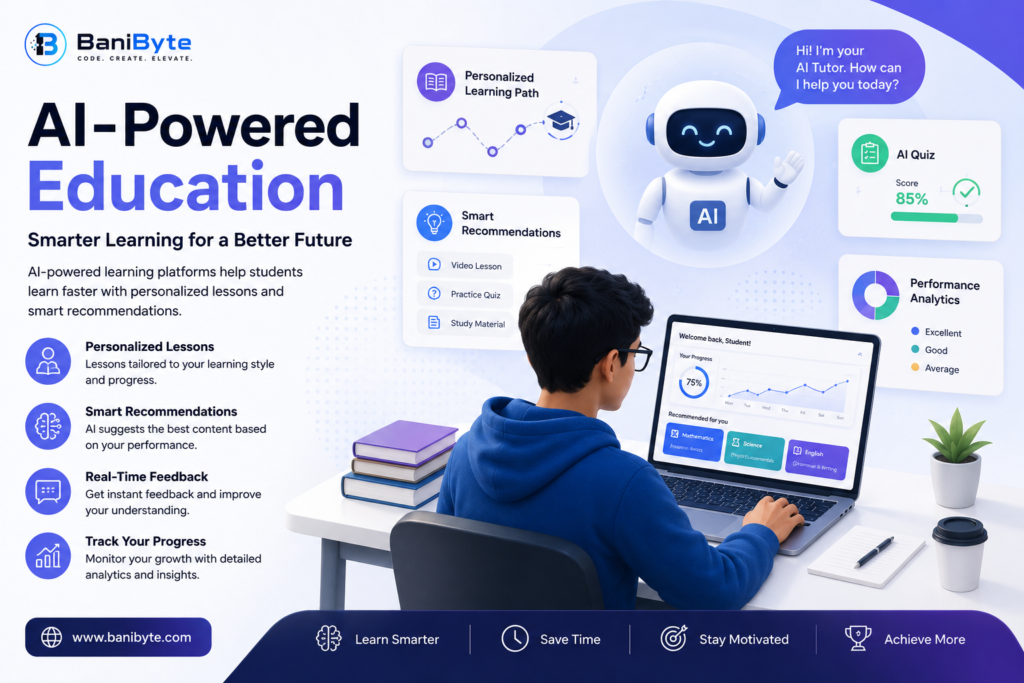
How AI Is Transforming Education
Artificial Intelligence allows learning systems to understand how students study and respond based on their individual needs. Instead of following one fixed method for everyone, AI adapts lessons according to a student’s performance and learning speed.
This creates a smarter and more engaging educational experience.
Features of AI Learning Platforms
Modern AI education systems include powerful features such as:
- Personalized learning paths
- Smart lesson recommendations
- AI tutors and chatbots
- Automated quizzes and assessments
- Real-time progress tracking
- Interactive video learning
- Instant feedback and corrections
These tools help students stay motivated and improve their understanding faster.
Why Students Benefit from AI Learning
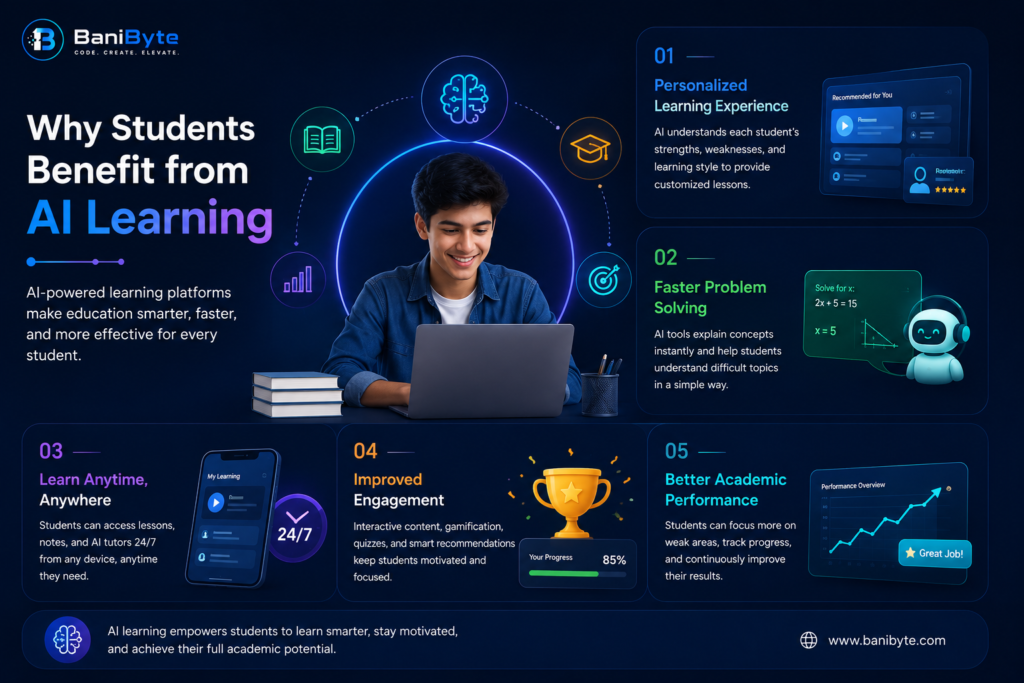
Personalized Learning Experience
Every student has different strengths and weaknesses. AI platforms analyze learning behavior and provide content that matches each student’s needs.
Faster Problem Solving
AI tools can instantly explain difficult concepts, helping students save time and learn more effectively.
Learning Anytime, Anywhere
Online AI platforms make education accessible 24/7 from mobile phones, tablets, or laptops.
Improved Engagement
Gamification, animations, and smart recommendations make learning more interesting and interactive.
Better Academic Performance
Students can focus more on weak subjects while tracking their progress through AI-generated reports and insights.
How Teachers Benefit from AI
Artificial Intelligence is not only helping students — it also supports teachers by:
- Automating grading systems
- Managing attendance records
- Creating smart assignments
- Analyzing student performance
- Saving valuable teaching time
This allows educators to focus more on teaching and mentoring students.
Challenges of AI in Education
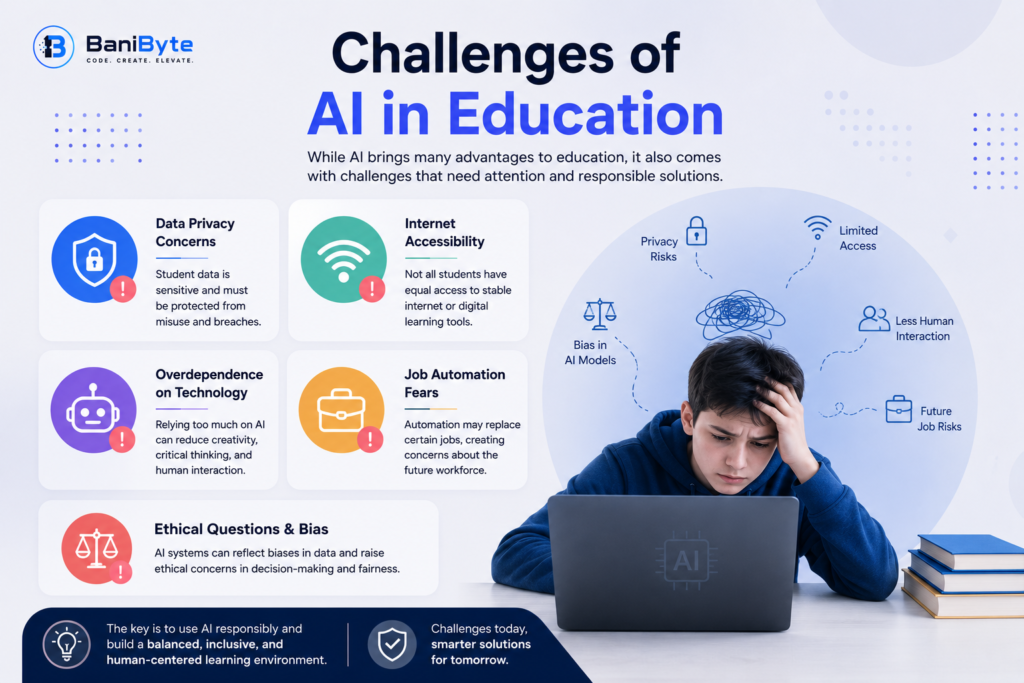
Despite its advantages, AI in education still faces some challenges:
- Dependence on internet access
- Data privacy concerns
- Limited human interaction
- High technology costs in some regions
Balancing technology with human teaching remains important for effective education.
The Future of Smart Education
The future of education will become more intelligent, flexible, and digital. AI is expected to introduce:
- Virtual AI classrooms
- Human-like AI tutors
- Real-time language translation
- Advanced personalized learning systems
- Smarter educational analytics
Technology will continue to reshape how knowledge is delivered and understood.
Final Thoughts
Artificial Intelligence is revolutionizing the education industry by making learning smarter, faster, and more personalized. Students now
Very Good Work👌👌👌👌👌